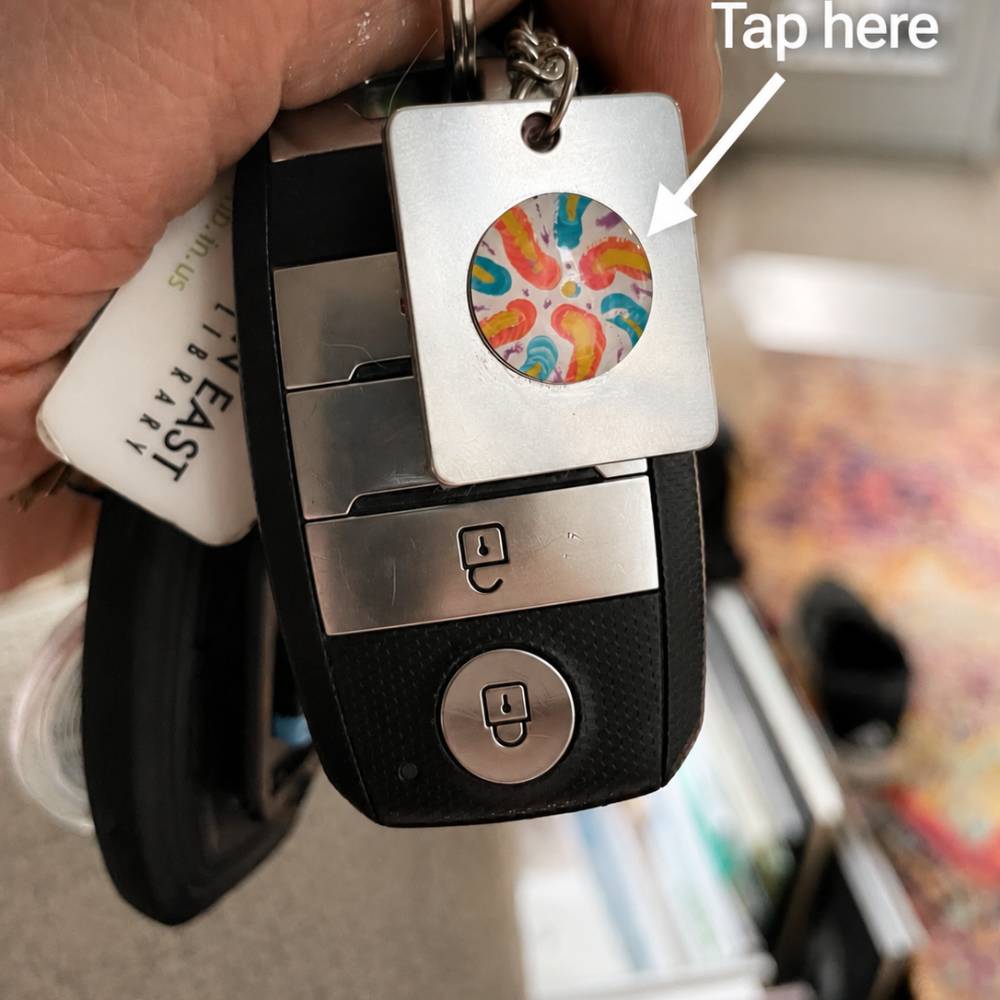
Tap Support for High School Seniors

Senior year looks like a finish line. But many students are carrying a lot into that final stretch.

High school seniors may start checking out, but that does not mean nothing matters. They are tired, ready to be done, and often facing some of the biggest decisions of their lives: college, work, military, trade school, money, leaving home, staying close, relationships, identity, and the question: “What happens after this?”

The hidden connection

Senior year can look like apathy on the outside and uncertainty on the inside.

A senior may seem unmotivated, checked out, distracted, emotional, or careless. But many are trying to finish one life chapter while quietly worrying about the next one.

Checking out may really mean: “I’m burned out and I don’t know how to keep caring.”
Avoiding decisions may really mean: “I’m scared I’ll choose wrong.”
Acting like it does not matter may really mean: “It matters so much that I’d rather not talk about it.”
Pulling away may really mean: “I’m already grieving the people and places I’m about to leave.”
How tap support fits

A simple support layer for the moments seniors do not always say out loud

Seniors already have counselors, teachers, parents, coaches, mentors, and trusted adults. But many hard moments happen in between: after a college email, before a scholarship deadline, after a hard conversation at home, after comparing plans with friends, during a late-night worry spiral, or when they realize graduation is closer than they thought.

No app.

A student taps a physical object and gets a short, private reset.

No account.

It feels simple, safe, and low-pressure — not like another school platform.

No stigma.

The object can be a sticker, magnet, bookmark, card, or keychain.

The physical connection

It starts with something they already touch.

A magnet. A keychain. A bookmark. A card. A sticker. The object changes. The moment matters.

NFC object example

Everyday tap object

NFC object example

Carry support with you

NFC object example

Support during the day

NFC object example

Tap when needed

Support categories

What seniors may need in the moment

Tap support can be organized around the real senior-year moments: finishing strong, making decisions, managing pressure, dealing with change, and stepping into what comes next.

School support categories

Finish the Next Step “I’m checked out, but I still need to finish.”
Decision Pressure “I don’t know which path is right.”
Deadline Reset “Scholarships, forms, applications, and emails are piling up.”
Future Plan Reality Check “I need to take one real step, not solve my whole life.”
Ask Before It Closes “I need help before the deadline passes.”

Life support categories

Leaving and Letting Go “I’m excited, but I’m also sad this is ending.”
Fear of Choosing Wrong “What if I make the wrong decision?”
Money and Independence “How am I actually going to afford this?”
Friendship Changes “Things already feel different.”
Who Am I Becoming? “I’m not sure who I am after high school.”
What affects school performance

Six school pressures seniors carry into the final year

These are the things that make it harder to finish strong, complete deadlines, stay motivated, ask for help, make plans, or believe they are ready for what comes next.

1

Senioritis and motivation drop

Many seniors are mentally done before the year is actually over. They may be tired of assignments, routines, bells, expectations, and pressure.

What may be on their mind: “I’m just done.” “None of this feels real anymore.” “I know I should care, but I’m tired.”
Tap support idea You do not have to feel motivated. Just finish the next small thing.
2

College, job, military, or trade decisions

Seniors are often asked to make adult-sized decisions while still living inside a teenage schedule. Every option can feel exciting, expensive, scary, or permanent.

What may be on their mind: “What am I supposed to do next?” “What if I pick the wrong path?” “Everyone keeps asking about my plan.”
Tap support idea You are choosing a next step, not your entire life forever.
3

Scholarship and application stress

Forms, essays, deadlines, recommendation letters, FAFSA, deposits, portals, and emails can pile up quickly. Avoidance can look like laziness when it is really overwhelm.

What may be on their mind: “I don’t even know what I’m missing.” “There are too many deadlines.” “I’ll deal with it later.”
Tap support idea Open one email. Find one deadline. Take one next step.
4

Fear of not measuring up

Seniors may compare acceptances, scholarships, GPAs, jobs, athletic plans, family expectations, and friend announcements.

What may be on their mind: “Their plan sounds better than mine.” “I’m behind.” “What if people are disappointed in me?”
Tap support idea Someone else’s path is not proof that yours is wrong.
5

Finishing strong after burnout

By senior year, some students have been pushing for years. Others are trying to recover from hard seasons while still being expected to perform.

What may be on their mind: “I don’t have much left.” “I’m tired of proving myself.” “I just need this year to be over.”
Tap support idea Finish does not mean perfect. Finish means keep showing up.
6

Balancing school, work, and future planning

Many seniors are juggling classes, jobs, family responsibilities, activities, applications, transportation, money, and decisions all at once.

What may be on their mind: “I don’t have enough time.” “Everyone needs something from me.” “I’m trying to keep everything together.”
Tap support idea You cannot carry everything at once. Choose the next right thing.
What affects general life

Six life pressures seniors carry beyond the classroom

These may not look academic at first, but they shape confidence, mood, relationships, decisions, motivation, and the way seniors step into what comes next.

1

Fear of leaving home

Even seniors who say they cannot wait to leave may feel nervous about distance, responsibility, independence, and losing the familiar rhythms of home.

What may be on their mind: “What if I’m not ready?” “What if I miss home more than I expect?” “What if everything changes?”
Tap support idea Being nervous about leaving does not mean you are not ready to grow.
2

Grieving the end of childhood

Senior year is full of lasts: last game, last concert, last hallway, last lunch table, last class with people they have known for years.

What may be on their mind: “I didn’t think this would feel sad.” “I’m ready, but I’m not ready.” “This part of my life is really ending.”
Tap support idea It is okay to be excited for what is next and sad about what is ending.
3

Friend groups changing

As plans become different, friendships can shift. Some students pull away early to make leaving hurt less. Others feel left behind before anyone has even left.

What may be on their mind: “Will we still be close?” “They already seem different.” “I don’t know how to say goodbye.”
Tap support idea Changing does not erase what mattered. Some friendships shift and still matter.
4

Parent and family pressure

Families may have strong hopes, fears, financial limits, expectations, or opinions. Seniors can feel pulled between what others want and what they are trying to figure out.

What may be on their mind: “I don’t want to disappoint them.” “They don’t understand what I want.” “Everyone has an opinion about my future.”
Tap support idea Your future can include advice without being controlled by everyone’s fear.
5

Money worries

Seniors may be thinking about tuition, transportation, gas, rent, deposits, books, work hours, debt, or whether a dream is realistic.

What may be on their mind: “How am I going to pay for this?” “I don’t want to be a burden.” “Money might decide everything.”
Tap support idea Money questions are not failure. They are real questions worth asking out loud.
6

“What if I choose wrong?”

Some seniors feel like one decision will define everything. That pressure can make them freeze, delay, avoid, or pretend they do not care.

What may be on their mind: “What if I regret this?” “What if I’m not good enough?” “What if everyone else figures it out and I don’t?”
Tap support idea Most paths are built one step at a time. You can adjust as you learn.

One tap will not decide their future. But it can steady them before the next step.

Tap support is not a career plan. It is not counseling. It is not another login. It is a small physical object that opens a brief, private reset when a senior needs to pause, think clearly, and take the next right step.

Learn about TagsToTap