Tap Support for Grades 6–8
Middle school students carry more than a backpack.
In 6th, 7th, and 8th grade, school performance is often the visible issue.
But underneath it, students may be carrying friendship stress, fear of embarrassment,
family pressure, online drama, exhaustion, and big emotions they do not yet know how to name.
The hidden connection
School performance is often the visible problem. Life pressure is often the hidden cause.
A missing assignment may not simply mean a student does not care.
A bad attitude may not simply mean defiance.
A quiet student may not simply be fine.
A missing assignment may really mean:
“I was overwhelmed and did not know where to start.”
A bad attitude may really mean:
“I was embarrassed and tried to protect myself.”
Not trying may really mean:
“I am afraid to fail in front of everyone.”
Being distracted may really mean:
“My friend situation is falling apart.”
Strategically placed support
For middle school, the object matters — and the timing matters.
This is strategically placed support. Most middle school students may not have access to their phones during the school day.
But after school, in the car, at home, before homework, after a group chat, or before tomorrow starts, a tap object can meet them right where the pressure shows up.
The moment may need a pause, encouragement, perspective, connection, or one small action.
What the tap does
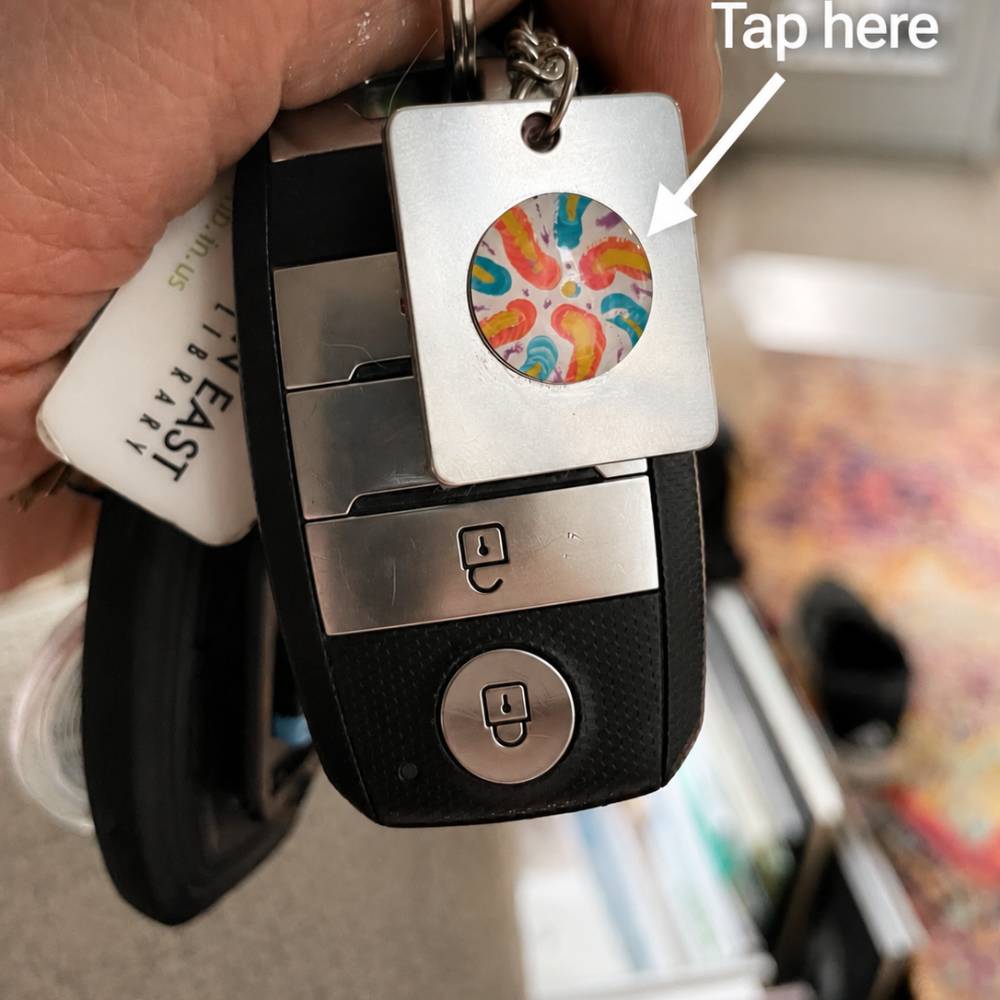
A student taps a sticker, keychain, bookmark, magnet, or car air-vent object and gets the kind of support the moment needs:
- A pause before the feeling takes over.
- Encouragement that sounds real, not cheesy.
- Perspective that names the moment without shame.
- Connection to text or talk to someone safe, when needed.
- One small action that is simple enough to actually do.
Where it can live
The object should live where the student already pauses, rides, opens, carries, or sees it.
Backpack zipper tag
Bookmark
Water bottle sticker
Car air vent object
Refrigerator magnet
Homework folder sticker
The school-day moment may happen at 11:30. The reset may happen at 3:45 — in the car, at the fridge, or before homework starts.
Example: after a rough lunch
A middle schooler gets left out at lunch and holds it together all afternoon. After school, they tap the air-vent object in the car or the tag on their backpack. Pause. Perspective: “Being left out today does not mean you do not belong.” One small action: text someone safe or choose one small thing to do before homework.
Example: before homework
A student opens the fridge, sees the magnet, and remembers the assignment they have been avoiding. The tap meets the panic. Pause. Encouragement: “You do not need to finish everything to start.” One small action: open the folder and do the first five minutes.
1
Focus and mental overload
A student may look distracted, but their brain may simply be full. Too many assignments,
too many tabs open, too many worries, and no clear next step.
What may be on their mind:
“I have too much to do.”
“I’m already behind.”
“I don’t know where to start.”
Tap support idea
Pause. Pick one thing. Start with the next tiny step.
2
Fear of looking dumb
Many students know more than they show. They may avoid raising a hand, reading aloud,
or asking for help because being wrong in front of peers feels too risky.
What may be on their mind:
“What if everyone laughs?”
“What if I ask a stupid question?”
“I’ll just act like I don’t care.”
Tap support idea
You do not have to look confident to take one brave step.
3
Organization and remembering
Middle school often means more teachers, more assignments, more apps, more folders,
and more deadlines. A capable student can still get buried by the system.
What may be on their mind:
“I forgot where the homework is.”
“I didn’t know it was due.”
“I meant to do it.”
Tap support idea
Before you panic, check: what class, what assignment, what is due next?
4
Test stress and performance anxiety
Some students know the material but freeze. Others see one bad grade as proof they are
bad at school instead of seeing it as feedback.
What may be on their mind:
“I’m going to fail.”
“My parents are going to be mad.”
“I’m just bad at math.”
Tap support idea
One grade is feedback. It is not your identity.
5
Social drama during the school day
Friend issues are not separate from learning. A student can walk into class after being
ignored, embarrassed, excluded, or talked about and be unavailable for learning.
What may be on their mind:
“Why did they stop talking to me?”
“Are they mad at me?”
“Everyone knows.”
Tap support idea
You can have a hard moment and still get through this class.
6
Sleep, energy, and body changes
Middle school students are growing fast. They may be tired, hungry, self-conscious,
uncomfortable, or overwhelmed by body changes they cannot easily explain.
What may be on their mind:
“I’m exhausted.”
“I hate how I look.”
“I don’t feel like myself today.”
Tap support idea
Check your body first: water, food, breath, shoulders, jaw.
1
Belonging
This may be one of the biggest middle school questions. Students are constantly trying
to figure out where they fit and whether they are wanted.
What may be on their mind:
“Where do I fit?”
“Who are my real friends?”
“Am I being left out?”
Tap support idea
You do not have to be liked by everyone to belong somewhere.
2
Identity and self-worth
Students compare themselves constantly: looks, clothes, grades, popularity, athletic ability,
money, phones, personality, and family life.
What may be on their mind:
“What’s wrong with me?”
“I’m not good at anything.”
“Everyone else has it figured out.”
Tap support idea
You are still becoming. This is not the final version of you.
3
Online pressure
Group chats, streaks, likes, screenshots, rumors, posts, and being left out online
can follow students into school and then back home again.
What may be on their mind:
“Why didn’t they respond?”
“Did they post without me?”
“What if they screenshot this?”
Tap support idea
Before you reply, pause. You do not have to fix this while upset.
4
Family stress
Some students carry divorce, grief, illness, money stress, yelling, caregiving,
moving, instability, or pressure to be perfect.
What may be on their mind:
“I can’t talk about this.”
“I have to act normal.”
“I’m tired of being strong.”
Tap support idea
What you are carrying is real. Take the next safe step.
5
Emotional regulation
Middle school students can feel very big emotions before they have adult tools
to manage them. The feeling may come before the words.
What may be on their mind:
“I’m so mad.”
“I’m going to cry.”
“I can’t calm down.”
Tap support idea
Name it first: mad, hurt, embarrassed, scared, tired. Then breathe.
6
Pressure to grow up
Middle school students are not little kids, but they are not high schoolers either.
They want independence, but still need structure, reassurance, and safe adults.
What may be on their mind:
“I should be able to handle this.”
“I don’t want to need help.”
“I don’t know who to trust.”
Tap support idea
Needing help does not mean you are immature. It means you are human.
One tap will not solve middle school. But it can meet the moment before a hard day becomes a spiral.
Tap support is not a mental health app. It is not homework. It is not another login.
It is support placed where middle-school pressure already shows up — on a backpack, bookmark,
water bottle, car air vent, or refrigerator. The moment may need a pause, encouragement,
perspective, connection, or one small step toward someone safe.
Learn about TagsToTap