Tap Support for Students Carrying Family Stress
Some students are not distracted because they do not care. They are distracted because home is heavy.
Family stress does not stay at home. Students may carry divorce, arguments, illness,
money pressure, caregiving, grief, addiction, moving between homes, sibling stress,
or the pressure to act normal while something at home feels uncertain.
Underneath it all may be the quiet question:
“How am I supposed to focus when home does not feel okay?”
The hidden connection
Family stress can look like attitude, silence, distraction, tiredness, or falling behind.
A student may not explain what is happening at home. They may protect their family,
avoid embarrassment, fear making things worse, or believe they should be able to handle it.
But home stress can follow them into class, lunch, practice, work, and late nights.
Being distracted may really mean:
“I am replaying what happened at home last night.”
Acting angry may really mean:
“I feel powerless somewhere else, and it is leaking out here.”
Not turning work in may really mean:
“I had too much happening at home to think clearly.”
Being quiet may really mean:
“I do not know how to talk about this without feeling exposed.”
The strategically placed interruption
When home stress follows them into the day, the tap gives one safe next step.
This is a strategically placed interruption. When family stress starts turning into spiraling,
shutdown, anger, or isolation, a student taps the object already near them — backpack tag,
water bottle sticker, notebook, car air-vent object, refrigerator magnet, keychain, or lip balm.
They get one breath, one truth, one next step, and, if needed, an easy bridge to text someone safe.
One breath
Enough space to slow the body before the feeling takes over.
One truth
What is happening at home is real, but it is not theirs to carry alone.
One next step
Do the next safe thing: breathe, write one sentence, ask one adult, or step away.
One bridge
A simple way to text someone safe without having to explain everything first.
Example: after a hard morning
A student leaves home after an argument and has to walk into school like nothing happened.
The tag interrupts that moment. One breath. One truth: “Hard mornings do not make you weak.”
One next step: tell a trusted adult, “Home was hard this morning,” or choose the first class task instead of carrying the whole morning alone.
Example: when the house gets loud
The student taps the refrigerator magnet, car air-vent object, or lip balm before reacting.
One breath. One truth: “You can care about your family without fixing every adult problem.”
One next step: go to a safer room, text someone safe, write what happened, or ask for help if home does not feel safe.
The object should live where family stress actually shows up.
Not every student will tap during school. Some taps happen before school, after school, in the car,
at the fridge, at a desk, or right before homework when the house finally gets quiet.
Backpack tag
Water bottle sticker
Notebook sticker
Car air-vent object
Refrigerator magnet
Keychain
Lip balm
Desk card
The physical connection
It starts with something they already touch.
A backpack tag. A notebook sticker. A keychain. A card. A water bottle sticker.
A car air-vent object. A refrigerator magnet. Lip balm on a desk.
The object changes. The moment matters.

Everyday tap object

Carry support with you
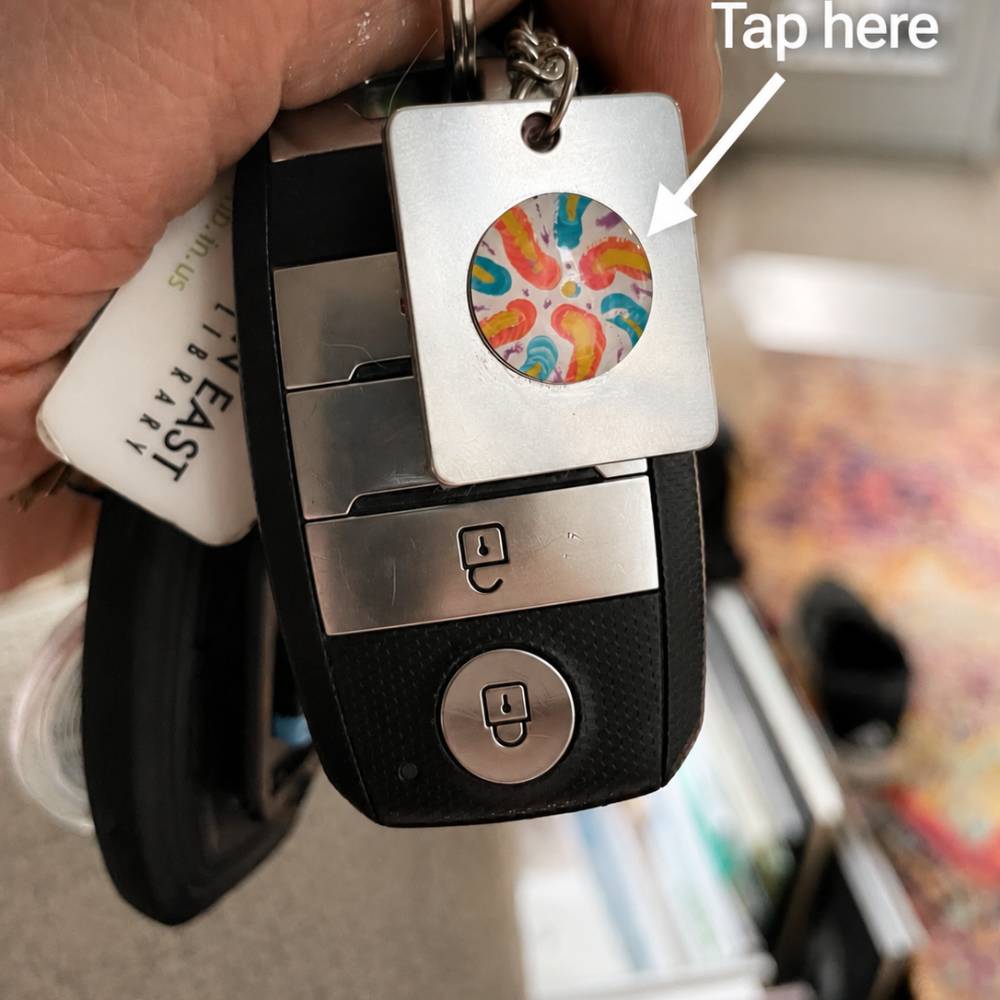
Support during the day

Tap when needed
1
Divorce, separation, or moving between homes
Students may be managing two houses, two sets of rules, schedule changes,
transportation stress, loyalty conflicts, and the emotional weight of family change.
What may be on their mind:
“I do not know where home feels like home.”
“I feel caught in the middle.”
“I have to keep track of everything.”
Tap support idea
You do not have to fix the family map. Focus on the next safe step in front of you.
2
Arguments and conflict at home
Yelling, tension, silence, blame, or unpredictable moods can make a student feel alert,
tired, angry, or distracted even after they leave the house.
What may be on their mind:
“What is it going to be like when I get home?”
“I hate when people fight.”
“I cannot relax.”
Tap support idea
Your body may still be on alert. Breathe first. You are here now.
3
Illness, caregiving, or worry about someone
Students may be worried about a parent, sibling, grandparent, or loved one.
They may carry fear, responsibility, sadness, and uncertainty into the school day.
What may be on their mind:
“What if something gets worse?”
“I need to check on them.”
“I feel guilty being away.”
Tap support idea
Caring about someone does not mean you have to carry the worry alone.
4
Money pressure at home
Students may know more about family stress than adults realize.
Bills, food, clothing, activities, transportation, jobs, and college costs can weigh on them.
What may be on their mind:
“I do not want to ask for anything.”
“I know money is tight.”
“I feel like a burden.”
Tap support idea
Money stress is real. It does not make you a burden.
5
Protecting family privacy
Some students do not want people to know what is happening at home.
They may hide pain because they feel embarrassed, loyal, afraid, or unsure who can be trusted.
What may be on their mind:
“I cannot tell anyone.”
“People would judge my family.”
“I do not want to make things worse.”
Tap support idea
You do not have to tell everyone. One safe adult can help you carry less.
6
Trying to act normal
Students may walk into school after a hard morning, a tense night, or a painful family moment
and feel expected to behave like nothing happened.
What may be on their mind:
“I have to pretend I’m fine.”
“Nobody knows what happened before school.”
“I cannot switch my brain that fast.”
Tap support idea
You are allowed to need a minute. Hard mornings do not make you weak.
1
Feeling responsible for adult problems
Some students feel like they need to fix emotions, money, conflict, schedules,
siblings, or the happiness of adults around them.
What may be on their mind:
“I have to keep everyone okay.”
“If I mess up, I make things harder.”
“I feel older than I am.”
Tap support idea
You can care deeply without being responsible for fixing adult problems.
2
Not knowing what home will feel like
When home feels unpredictable, students may stay on alert all day.
Their body may be preparing for tension before anything has even happened.
What may be on their mind:
“Will today be calm or bad?”
“I never know what mood I’m walking into.”
“I need to be ready.”
Tap support idea
Unpredictability is exhausting. Find one steady thing you can do right now.
3
Guilt for wanting normal life
Students may feel guilty for wanting fun, friends, school events, rest, or independence
when someone at home is struggling.
What may be on their mind:
“Is it wrong to want a break?”
“I should be home helping.”
“I feel selfish for wanting normal.”
Tap support idea
Wanting joy, rest, and normal life does not mean you do not care.
4
Taking care of siblings or family members
Some students help raise siblings, translate for adults, manage routines,
care for relatives, or emotionally support family members more than people know.
What may be on their mind:
“People do not know how much I do.”
“I cannot stay after school.”
“I am tired before I even start homework.”
Tap support idea
What you do matters. You also deserve support, rest, and help.
5
Embarrassment about home
Students may avoid inviting people over, talking about family, explaining absences,
or sharing what life is really like because they fear judgment.
What may be on their mind:
“I do not want people to see my life.”
“They would not understand.”
“I wish things were different.”
Tap support idea
Your home situation is not your shame. You are more than what is happening around you.
6
Heavy thoughts when things feel too much
When family stress builds, students may feel trapped, hopeless, angry, numb,
or unsure how much longer they can carry it quietly.
What may be on their mind:
“I cannot keep doing this.”
“I do not want to go home.”
“I need someone to know.”
Tap support idea
Do not stay alone with heavy thoughts. Text someone safe, find a trusted adult, or ask for help now.
One tap will not fix what is happening at home. But it can be a strategically placed interruption before home stress becomes isolation.
Tap support is not counseling, crisis care, family therapy, or a replacement for trusted people.
It is a small physical object that opens a brief, private reset when a student needs one breath,
one truth, one next step, and an easy bridge to someone safe.
Learn about TagsToTap